
Current location: HOME >> HAITUOTIANHENG>>details
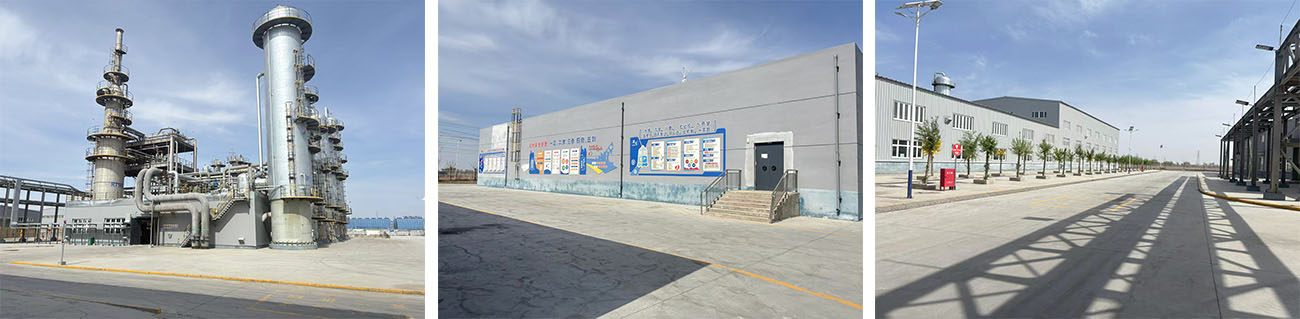
Xinjiang Haituo Tianheng Chemical Co., Ltd. was established in December 2018. It is a chemical enterprise focusing on the research, development and production of hydrazine hydrate. Its business scope covers the production and sales of chemical products (excluding hazardous chemicals and flammable & explosive materials), activated carbon, sodium carboxymethyl cellulose, and thiocarbohydrazide. (Projects subject to approval in accordance with relevant laws and regulations can only be carried out after obtaining approvals from competent authorities). The company is located in Shihotun New Material Industrial Park in Shihezi City, covering an area of over 134 mu.
Specializing in the production and sales of hydrazine hydrate, the company adopts the ketazine process for hydrazine hydrate production, an advanced technology originally introduced from Japan. Featuring inherently safe facilities, this process ranks among the world’s most advanced production technologies for hydrazine hydrate. The company’s standalone production unit in Shihotun Industrial Park boasts an annual output of 30,000 tons, making it the world’s largest single-unit production line for hydrazine hydrate. It integrates resource advantages with technological strengths, delivering outstanding merits including high yield, low energy consumption, high recycling rates of raw materials and intermediate products, and efficient comprehensive utilization of wastewater. The completion and operation of the project will optimize the industrial chain, enhance corporate economic benefits and strengthen market competitiveness.
The company plans to basically realize the industrial chain integration of chlor-alkali – hydrazine hydrate – downstream extended products (ADC foaming agent, triazole, thiocarbohydrazide and other projects) by 2025. Currently, it is investing in and constructing a 30,000-ton annual hydrazine hydrate project in Shihotun New Material Industrial Park. Leveraging the abundant local chlor-alkali resources in Shihezi, the company strives to build an integrated fine chemical base with upstream and downstream linkage based on chlor-alkali and hydrazine hydrate raw materials, contributing more to local economic and social development.
Hydrazine hydrate, also known as hydrate diamide or hydrated hydrazine (abbreviated as HH), is a colorless and transparent liquid with an ammonia odor and high toxicity. As a vital intermediate in the chemical industry, it is used to synthesize more than 300 organic compounds.
As a key fine chemical raw material, hydrazine hydrate is mainly applied in the synthesis of foaming agents such as ADC, DIPA and TSH. It also serves as a deoxidizer and carbon dioxide remover for boilers and reaction vessels. In the pharmaceutical industry, it is used to manufacture drugs for anti-tuberculosis and anti-diabetes treatment. In the pesticide industry, it is an essential raw material for herbicides, plant growth regulators, bactericides, insecticides and rodenticides. In addition, it can be used in the production of rocket fuel, diazo fuel and rubber additives. With extensive application scenarios, it is an ideal fine chemical product.
Driven by the development of engineering plastics, pesticides, pharmaceuticals and other industries at home and abroad, as well as the continuous expansion of hydrazine hydrate’s application scope, hydrazine hydrate and its derivatives have been widely adopted in various industrial fields. Coupled with the lasting impact of the global COVID-19 pandemic, the market demand for hydrazine hydrate will maintain steady growth in the coming years, leading to a further widening supply gap.
Rooted in Xinjiang, Xinjiang Haituo Tianheng Chemical Co., Ltd. takes hydrazine hydrate production as its core development direction with world-leading technologies and green energy as the foundation. It has built a full industrial chain: photovoltaic power generation → hydrogen production by water electrolysis & brine electrolysis (hydrogen, chlorine and sodium hydroxide production) → synthetic ammonia and sodium hypochlorite from hydrogen → hydrazine hydrate.
The major applications of hydrazine hydrate fall into three core categories: pesticides, pharmaceuticals and chemical auxiliaries, which are detailed as follows:
Raw Materials for PesticidesNearly a thousand hydrazine derivatives have been developed for pesticide use, dozens of which have been patented and 30 to 40 of which have achieved industrial production. Pesticide manufacturing represents the largest consumption market for hydrazine, with an annual growth rate of 8% to 15%. Hydrazine-synthesized pesticides cover herbicides, insecticides, fungicides, defoliants and plant growth regulators.
Fungicides: Triadimefon, triadimenol, bitertanol, diniconazole, etaconazole, paclobutrazol, diniconazole, triflumizole, triadimefon, hexaconazole, cyproconazole, tricyclazole, etc.
Insecticides: Chlorantraniliprole, pymetrozine, etc.
Herbicides: Metribuzin, metamitron, amitrole, etc.
Plant growth regulators: Maleic hydrazide, hydroxyethyl hydrazine, etc.
Raw Materials for PharmaceuticalsDozens of pharmaceutical products are produced with hydrazine hydrate as a key raw material, including anti-depressants, antibiotics, cardiovascular drugs and anti-tuberculosis medicines. Typical products include antianxiety drugs (alprazolam, estazolam), antibiotics (3,4,5-trimethoxybenzoyl hydrazide, cefotiam, cefazolin sodium, cefamandole), and cardiovascular agents (troxerutin, molsidomine).
Chemical AuxiliariesHydrazine hydrate derivatives are widely used in chemical auxiliaries, including foaming agents, initiators and deoxidizers.
Foaming agents: Azodicarbonamide, benzenesulfonyl hydrazide, p-toluenesulfonyl hydrazide, aminoguanidine bicarbonate, etc.
Initiators: Azobisisobutyronitrile and other products.
Deoxidizers: Carbohydrazide and other related derivatives.
Beyond the above mainstream applications, hydrazine hydrate also has promising potential uses, such as graphene reducing agents and fuel cell raw materials.
Throughout the full industrial chain operation, the company strictly implements national low-carbon and environmental protection policies. Excess hydrogen is recycled for the development of hydrogen energy products (new energy vehicles, fuel cells, etc.). As a clean, efficient, safe and sustainable new energy source, hydrogen energy is recognized as the most promising clean energy in the 21st century.
Core advantages of hydrogen energy: It boasts a high combustion calorific value; per unit mass, hydrogen releases about 3 times the heat of gasoline, 3.9 times that of alcohol and 4.5 times that of coke. Its only combustion byproduct is water, making it the cleanest energy source worldwide. With abundant reserves, hydrogen can be produced from water, the most widespread resource on Earth, realizing a closed-loop material cycle and sustainable development.
Backed by solid technical strength, rich experience in chemical facility construction and hydrazine hydrate production and operation, as well as the low-cost raw materials and energy resources in Xinjiang, the company completed the construction and commercial operation of the 30,000-ton hydrazine hydrate project in 2024.
Relying on the profitable operation of the hydrazine hydrate project, the company will introduce strategic investors to launch the 500,000-ton sodium hypochlorite and 50,000-ton AC foaming agent projects, extend the upstream and downstream industrial chain and boost overall profitability. It will actively plan for listing and financing to promote the construction of green hydrogen production, synthetic ammonia, hydrogen peroxide and other projects, further improve the industrial chain layout, achieve self-sufficiency in raw material supply and elevate comprehensive economic benefits. Ultimately, the company aims to build a high-tech enterprise in Xinjiang that applies green energy to energy-intensive chemical production.